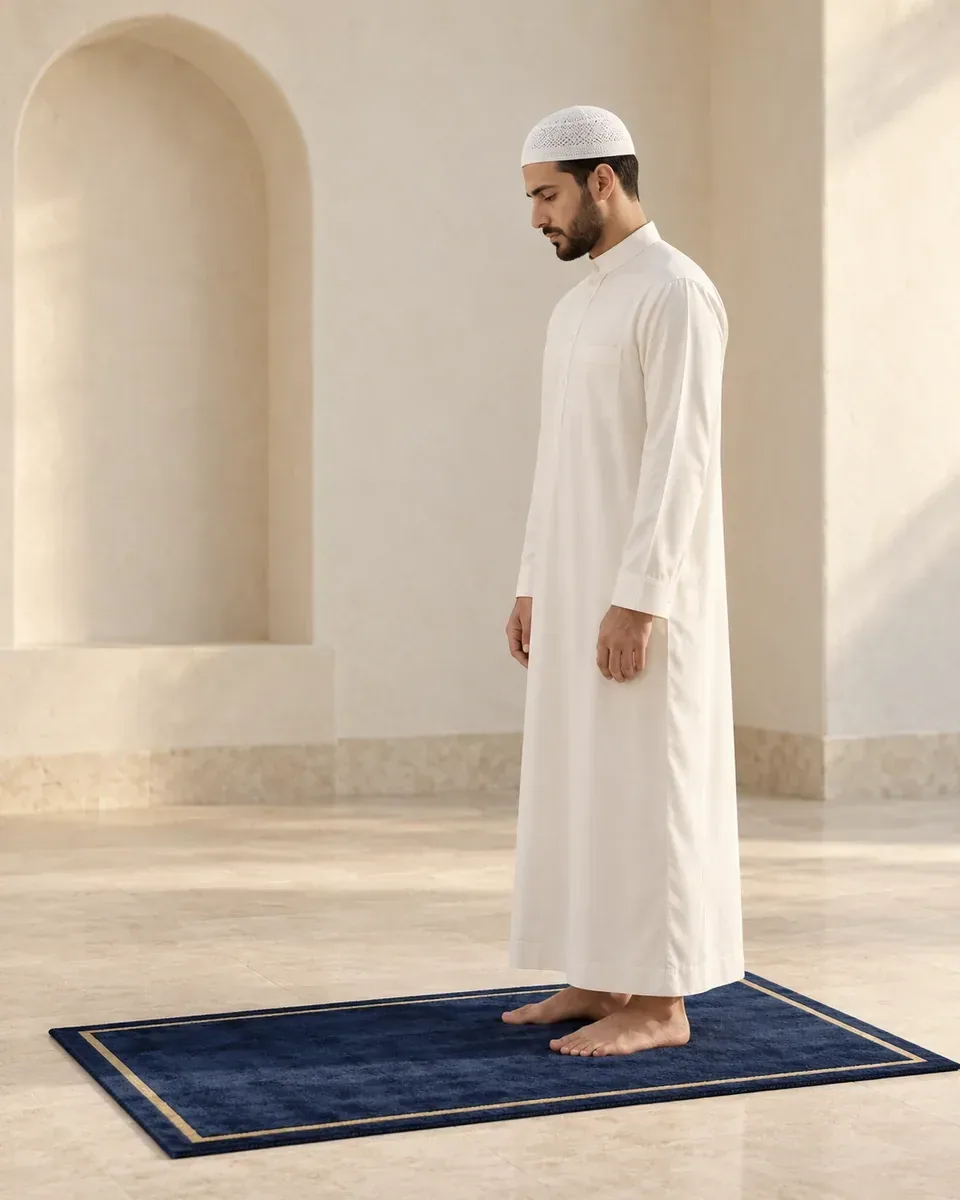
1 – Stand facing the qiblah
Stand in reverence and humility, facing the qiblah.

HomePrayer
“Pray as you have seen me praying.” (Bukhari)
“The Arabic word salaat … literally means supplication. It is the connection a Muslim establishes with his Lord and Creator.”
Prayer steps“The prayer restrains from shameful and unjust deeds.” (Al-‘Ankaboot 29:45)
It is the second pillar of Islam: “Islam has been built on five [pillars]… performing the prayers…” (Bukhari 8, Muslim 16)
Make sure the time has begun, you have wudu, your body, clothes and place are clean, and your body is covered as required.
“Allah does not accept prayer without purity.” (Muslim)
“From wherever you go out [for prayer], turn your face toward al-Masjid al-Haram.” (Al-Baqarah 2:149)
If the Ka‘bah is out of sight, facing the direction of Makkah is enough; a slight turn does no harm: “Whatever is between the east and the west is the qiblah.” (Tirmidhi 342)
The second unit (rak‘ah) is performed like the first; in the third and fourth units only al-Fatihah is recited. The steps below take you through a whole prayer, from the opening takbeer to the tasleem.
Stand in reverence and humility, facing the qiblah.
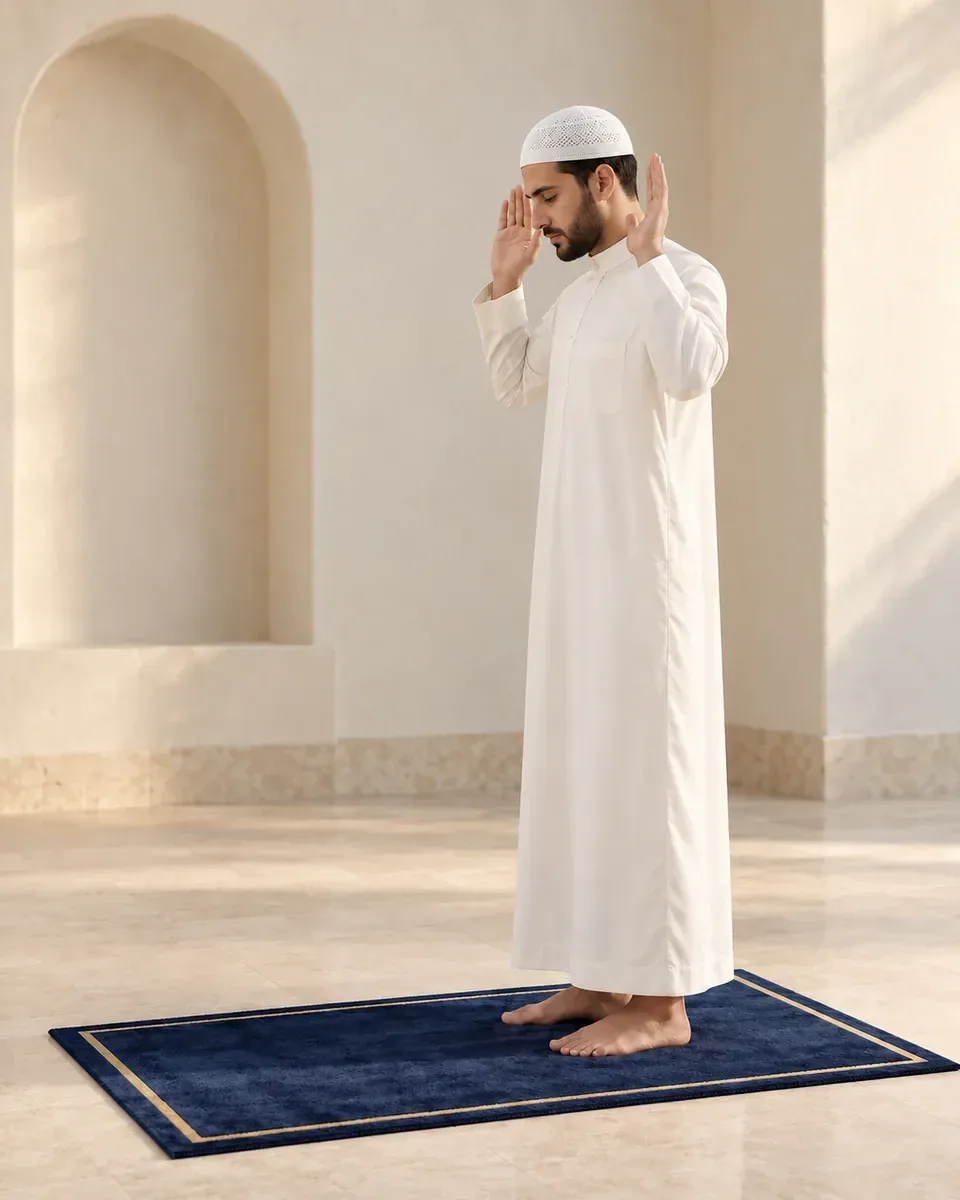
Have in mind which prayer you are offering, for Allah alone. Do not say it aloud: neither the Prophet ﷺ nor his companions did.
Raise the hands to the shoulders or the earlobes, palms toward the qiblah, and say “Allaahu akbar” (Allah is Most Great). (Bukhari 735, Muslim 391)
Place the right hand on the left, on the chest (Ibn Khuzaymah 479), and keep them there whenever you stand. Scholars differ on the position: the Hanafi school places them below the navel, and others above it.
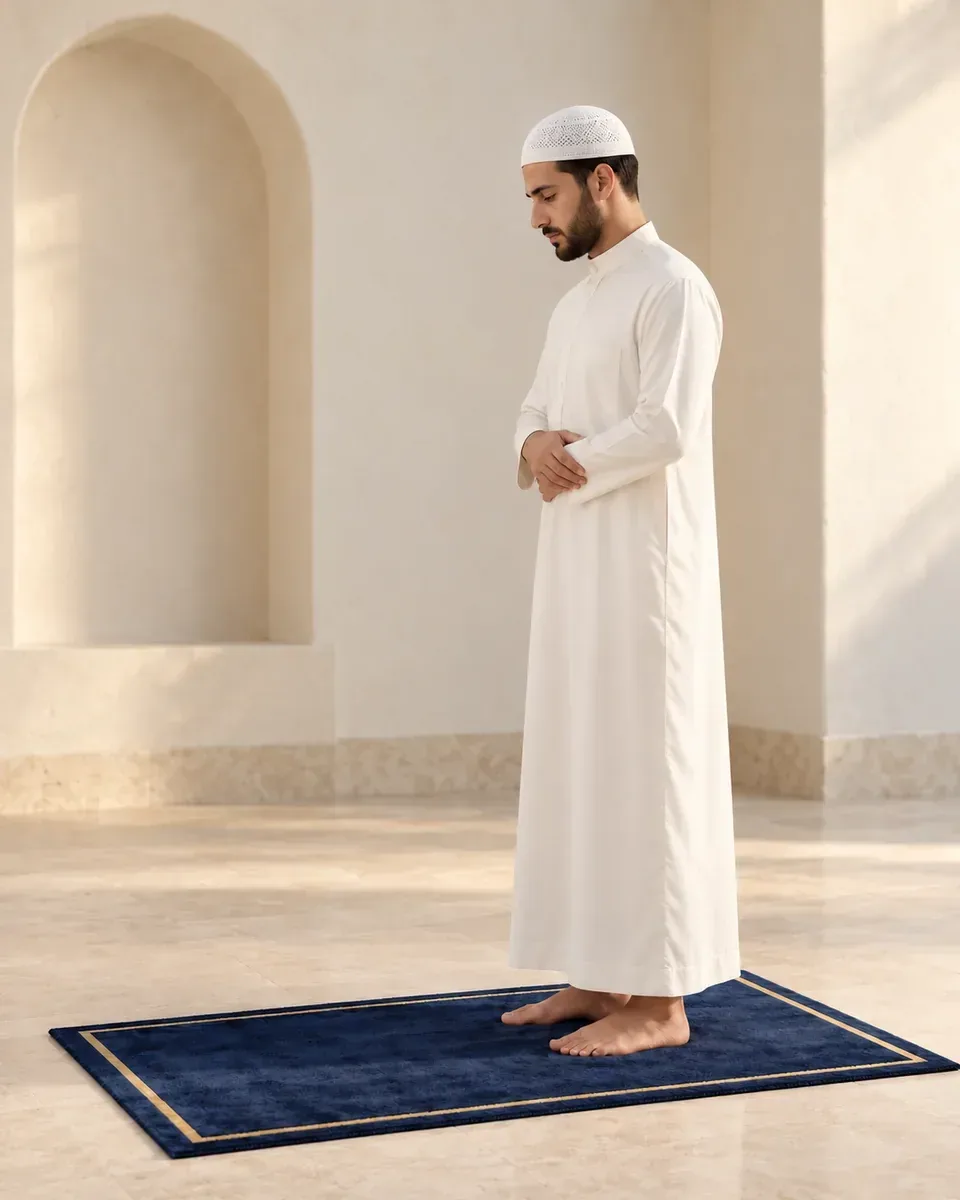
Say the opening supplication (recommended): “Subhaanakallaahumma wa bihamdika, wa tabaarakasmuka, wa ta‘aalaa jadduka, wa laa ilaaha ghayruk.” (Abu Dawood 775) Then say “A‘oodhu billaahi minash-shaytaanir-rajeem, bismillaahir-rahmaanir-raheem”, recite al-Fatihah and say “Aameen”. In the first two units, recite another surah after it.
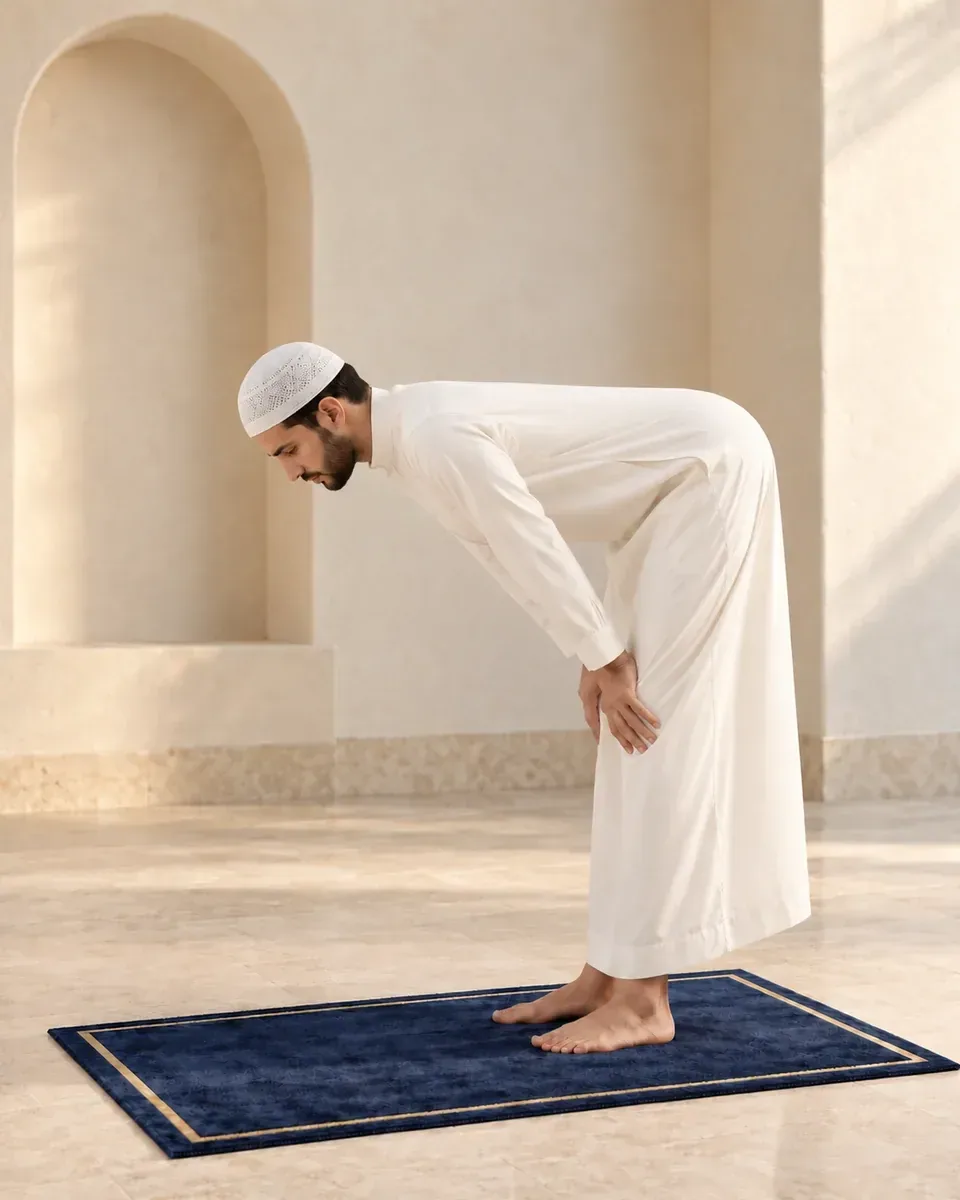
Say “Allaahu akbar” raising the hands, then bow with the back level and the head in line with it, palms on the knees. Say “Subhaana rabbiyal-‘adheem”: once is obligatory, three times recommended.
Rise, raising the hands to the shoulders or the earlobes, saying “Sami‘allaahu liman hamidah”, then “Rabbanaa wa lakal-hamd”, and stand straight and still.
Say “Allaahu akbar” and prostrate on the forehead and nose, hands, knees and toes. Keep the elbows raised off the floor and the arms away from the sides. Say “Subhaana rabbiyal-a‘laa”: once is obligatory, three times recommended.
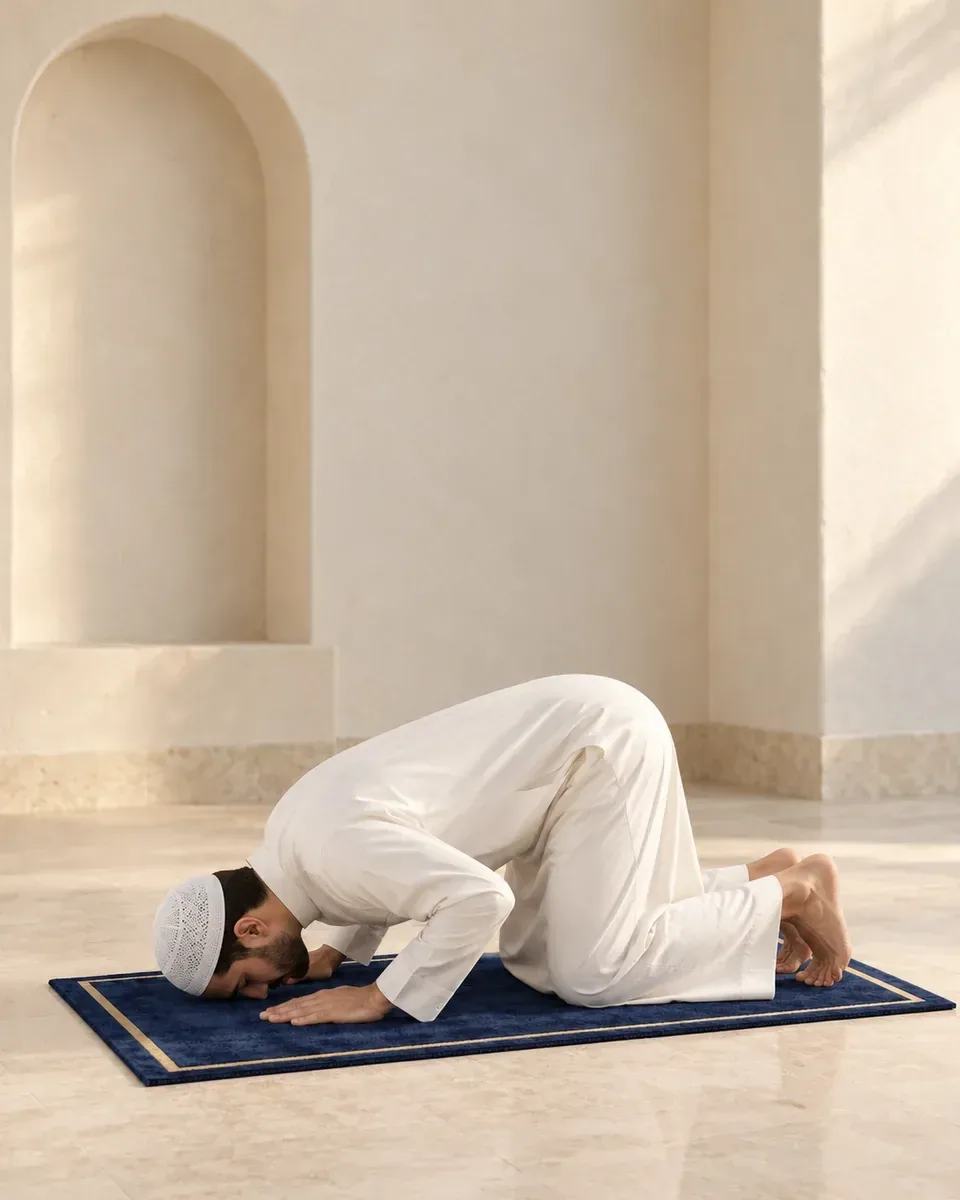
Sit on the left foot with the right foot upright, hands on the thighs, and say “Rabbighfir lee”. Then prostrate a second time as before; this completes the first unit.
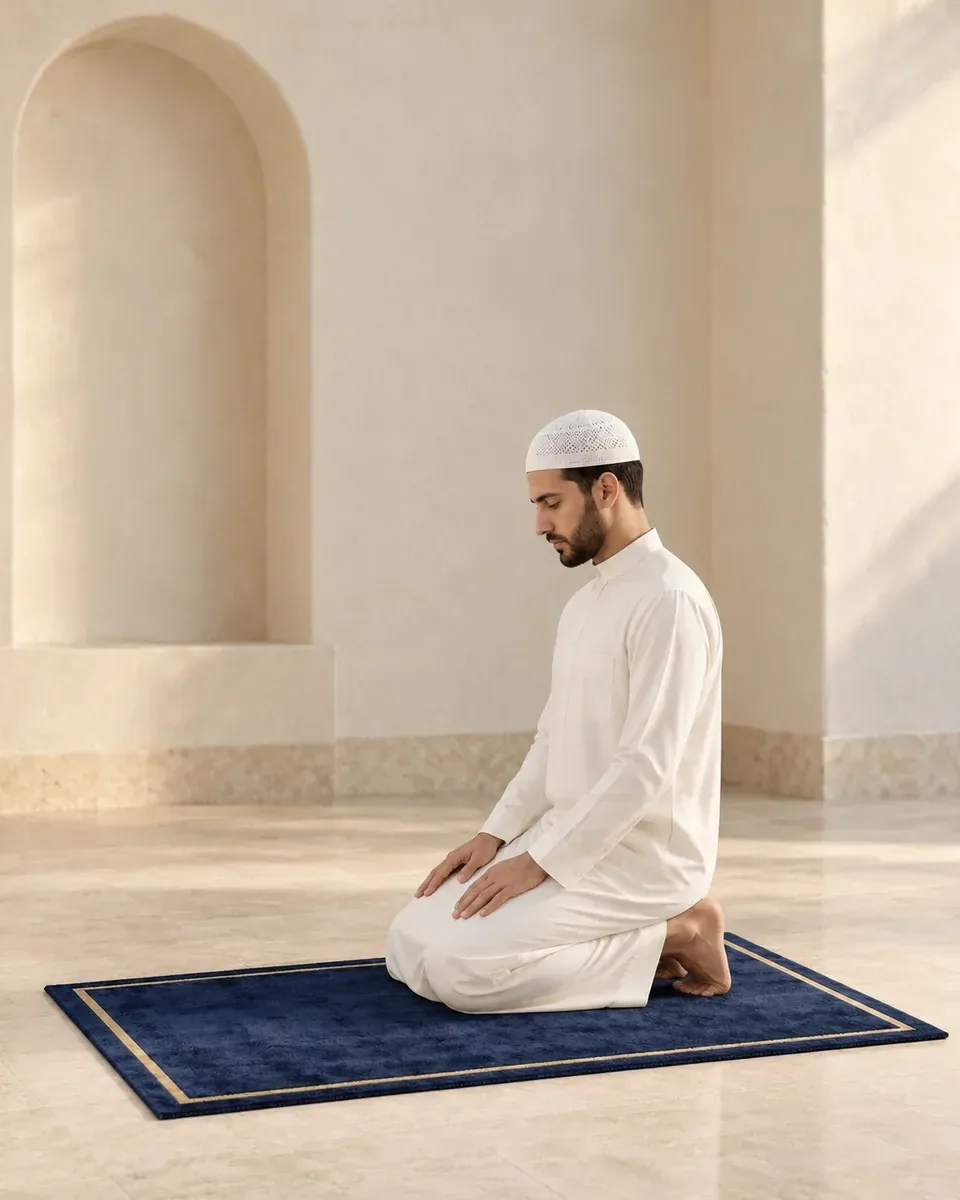
Rise from the prostration saying “Allaahu akbar” and stand upright. Pray the second unit like the first: al-Fatihah and a surah, the bow and two prostrations, without the opening takbeer or the opening supplication.
After the second unit, sit and recite the tashahhud: “At-tahiyyaatu lillaahi was-salawaatu wat-tayyibaat, as-salaamu ‘alayka ayyuhan-nabiyyu wa rahmatullaahi wa barakaatuh, as-salaamu ‘alaynaa wa ‘alaa ‘ibaadillaahis-saaliheen, ashhadu allaa ilaaha illallaah, wa ashhadu anna Muhammadan ‘abduhu wa rasooluh.” (Bukhari 831, Muslim 402) In a two-unit prayer such as Fajr, go on to the final tashahhud (step 13), then end the prayer.
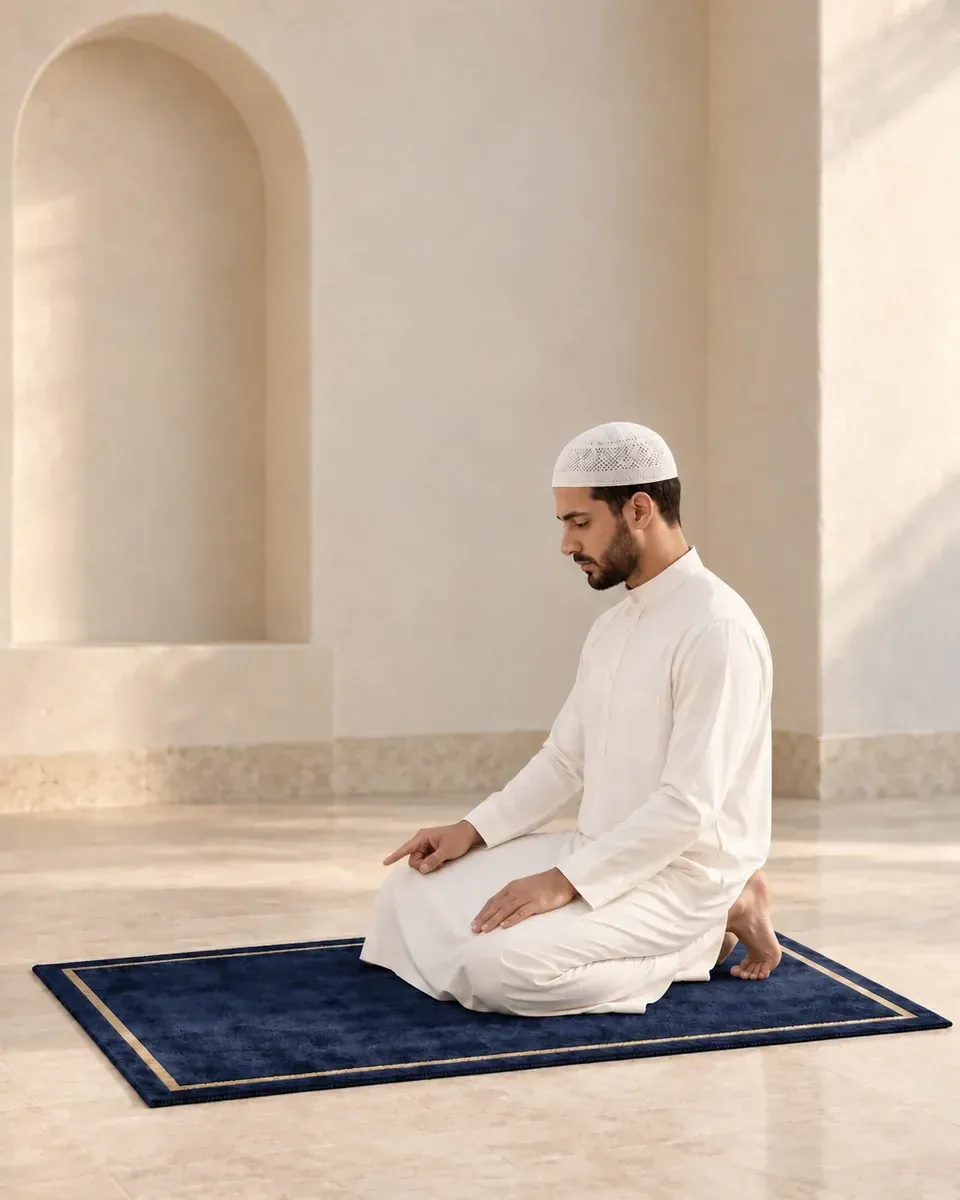
In Maghrib, stand for a third unit; in Dhuhr, ‘Asr and ‘Ishaa’, for a third and a fourth. Rise saying “Allaahu akbar”, raising the hands, recite al-Fatihah only, and complete each unit with its bow and two prostrations.
In the last sitting, recite the tashahhud, then the Ibrahimi prayer: “Allaahumma salli ‘alaa Muhammadin wa ‘alaa aali Muhammad, kamaa sallayta ‘alaa Ibraaheema wa ‘alaa aali Ibraaheem, innaka hameedun majeed. Allaahumma baarik ‘alaa Muhammadin wa ‘alaa aali Muhammad, kamaa baarakta ‘alaa Ibraaheema wa ‘alaa aali Ibraaheem, innaka hameedun majeed.” (Bukhari 3370)
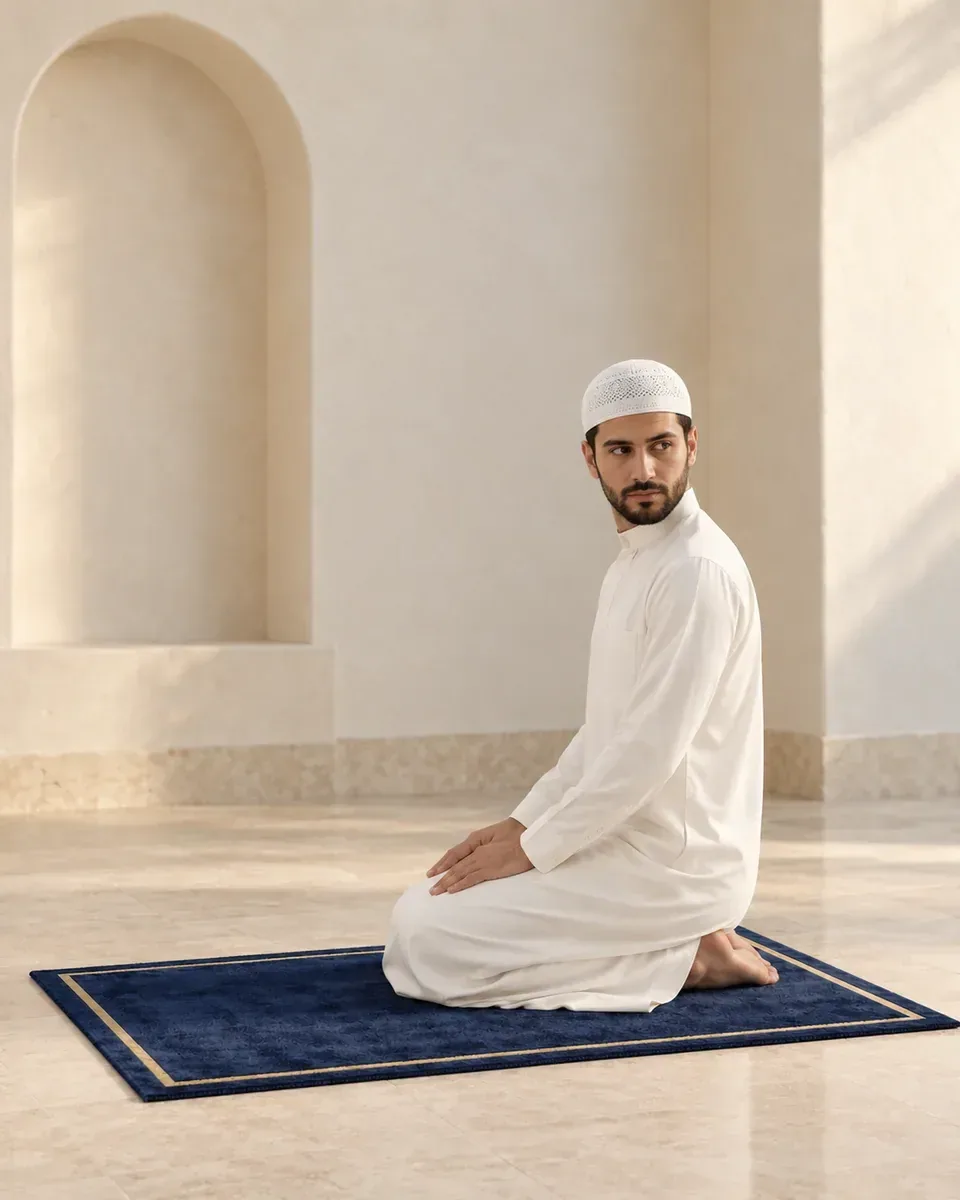
Turn to the right saying “Assalaamu ‘alaykum wa rahmatullaah”, then to the left. “The prayer begins with the takbeer and ends with the tasleem.” (Abu Dawood 61, Tirmidhi 3)
“The first act that the servant of Allah will be accountable for on the Day of Judgement will be his prayers.” (At-Tabaraanee, Al-Mu‘jam Al-Awsat: 1859)